Sexual Harassment Lawyers
We are the premier sexual harassment lawyers nationwide



400+
Clients Helped
✦ Enhanced Online Visibility
✦ Customized Strategies
✦ Improved Branding
Trusted by some of the best

Sales
+44%
$620k
Revenue created
FederalLawyers.com helps you get the legal help you need with sexual harassment issues
We help clients nationwide with their sexual harassment claims
Impress customers with a professional website design
Use Agencify’s power-packed features to personalise your site, communicate your value, and convert your leads.
- ✦ Enhanced Online Visibility
- ✦ Increased conversion rate
- ✦ Customized Strategies
- ✦ Improved Branding
$24k
+18%

Partner with a full-service marketing agency
Pixel-Perfect Design
Minimal customization features that extend WordPress in a natural way for an enhanced editing experience
Marketing Funnels
Improve user experience by offering intelligent one-click light and dark theme switching.
Full-Stack Development
All themes are tested with Google’s Lighthouse Accessibility reports to ensure your site is accessible
Artificial Intelligence
Themes utilize a cleverly thought out CSS and JavaScript framework which loads assets separately when needed
Showcase your best work for people to see
We’ll never do work that’s generic or follow trends blindly. We’re passionate about thoughtful projects that tell a story.
Agency Pro
Rebrand and strategy for Agency Pro lead generation software
MintCoin
Digital design refresh and marketing strategy for crypto market
InstaFunnels
Responsive website design for ConvertFunnels SaaS
Lead Metrics
Landing page and funnel design for popular lead generation tool
Don’t just take our word, hear from our clients
Design better sites with WordPress right in the browser without needing code, Blockify provides all the tools
★★★★★
“Agencify was a pleasure to work with. They followed my instructions to the letter, and the end results were absolutely outstanding.”

Bruce Davis
Creative Director @ ABC Design
★★★★★
“Really good. This agency is by far the most valuable business partner we have ever discovered. Keep up the good work! The team was a pleasure to work with. They always provide excellent advice, and the end results were absolutely outstanding.”

David Brown
Director of Design @ BlockWorks
★★★★★
“The more campaigns we can put together, the more pages we can create, the bigger we feel, and the more touch points we have with customers. Agencify unlocked that for us and allows us to do more with less.”

Jessica Lee
Founder and CEO @ Lightspeed
★★★★★
“Working alongside Agencify was a fantastic experience. They fulfilled all my expectations flawlessly, and the final results were beyond excellent. We have been recommending Agencify to all of our friends and business partners”

Helen Sanders
Marketing Director @ Affinity Homes
★★★★★
“I don’t know what else to say. The work is simply unbelievable! You’ve helped our business reach new heights we couldn’t dream about! Working with the team was an amazing experience. They fulfilled all of our requests efficiently, and the final results were breath-taking”

Victor Stevens
VP of Sales @ New Era
★★★★★
“We receive about a million page views every week now. Being in a B2C business, It’s really important for us to get the performance and design perfect. Agencify was able to help us improve both very quickly.”

Adam Fielding
Head of Digital @ LoudMouse
★★★★★
“They did such a great job on the campaign film for our Fall-Winter 2021 Fashion Collection, we can’t wait to work with them again!”

John Smith
Marketing Manager @ 4D Architects
★★★★★
“Absolutely brilliant work on our digital campaign. You’ve saved our business! If you aren’t sure, we highly recommend Agencify. Believe me, you won’t regret it. They did such a great job on the campaign film for our Fall-Winter 2021 Fashion Collection, we can’t wait to work with them again!”

Emily Johnson
Executive Producer @ Bright Studio
★★★★★
“Truly astonishing work, we are blown away by the results. If you are considering improving your conversion rate and brand presence then we can’t recommend Agencify enough.”

Lee Kendall
Lead Developer @ Spark Digital
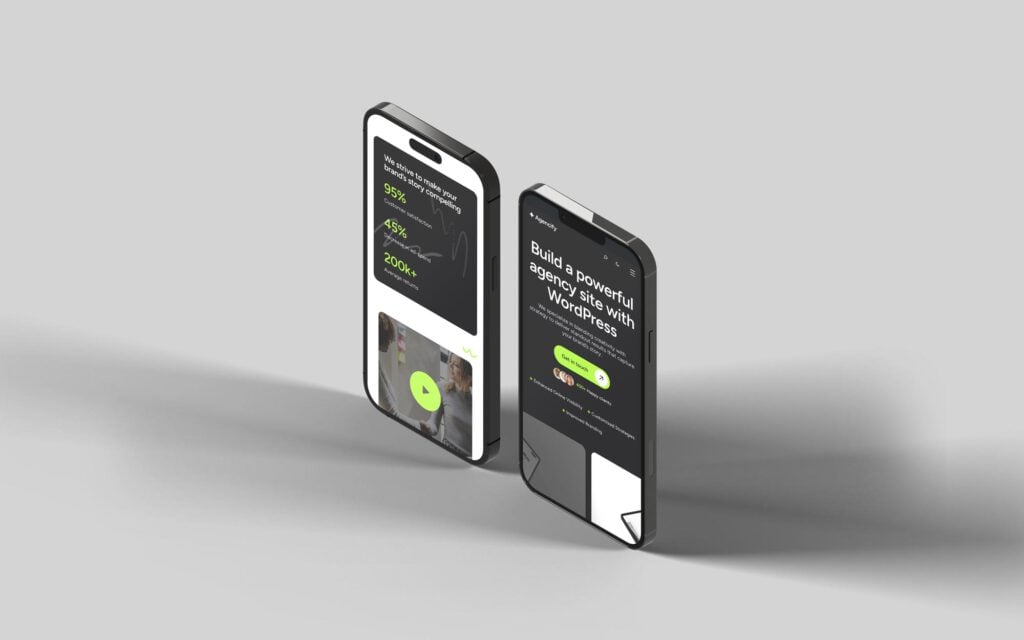
We strive to make your brand’s story compelling
95%
Customer satisfaction
45%
Decrease in ad-spend
200k+
Average returns

Personalized design and marketing for your business
We are a group of people who think differently, with a passion for all things digital. Our value-driven approach to design and marketing is unique.
- ✦ Enhanced Online Visibility
- ✦ Increased conversion rate
- ✦ Customized Strategies
- ✦ Improved Branding
How we help drive more sales for your business
Newsletters
Grow your brand with beautifully crafted emails
Conversions
Use information to derive data-backed decisions
eCommerce
Connect with your leads and customers in real-time
Frequently asked questions about our services
Have a different question? Contact our team now for a fast response.
Available now
Do themes require any plugins?
No, there are no plugins required by this theme. Everything you need to design an amazing website is provided by the free Blockify parent theme. You can optionally add the Blockify Pro plugin for extra functionality and features.
Does this theme support WooCommerce and EDD?
Yes, Blockify themes are compatible with the WooCommerce and also Easy Digital Downloads plugins for creating an eCommerce store.
Does this theme work with Elementor or page builders?
Yes, you can use Elementor or your page builder of choice with any of our themes. Blockify provides a Full Width page template which is perfect for creating full-width pages between the site header and footer. There is also a Blank page template which can be used to create complete pages, including header and footer, with your page builder.
Please note that blocks cannot be edited with page builders. Blocks can be customized with the WordPress block editor. Page builders can be used to replace parts of your site, however they can’t be used to edit blocks.
How to change the site logo?
Head to the Site Editor and then navigate to the Header Template Part. From there, click on the existing logo and then replace it with a block of your choice. You can use an Image block, SVG, Site Logo or Site Title block as the site logo, the choice is yours. We prefer to use SVGs for logos because they scale perfectly at all screen sizes and also support variable colors which makes them ideal for use with dark mode and animations.
How do I add custom SVG images?
Custom SVG images can be added to your site in multiple ways. The first option is to use the core Image block, however this requires the use of the Safe SVG plugin since WordPress doesn’t allow SVG uploads by default. There is also an SVG block variation provided with this theme which lets you simply paste SVG HTML code into an Image block. The third option is to use the Icon block variation. This displays an SVG icon which you can choose from a library of included icons, or upload your own.
How can I add animations to blocks?
Most core blocks have animation supported added. You can add and change transition effects without needing any code.
What version of PHP and WordPress is needed?
PHP 7.4 or higher is required however we recommend using a later version PHP 8.2 or above. All themes are tested with the latest version of WordPress.
How can I display blog posts on the home page?
This theme comes with multiple blog patterns that can be used to display posts on any page. Simply add a blog pattern to your home page template, or the page that is set as the Front Page. You can customize the Query Loop to suit your needs. Front page settings can be found from the WordPress admin dashboard under Settings → Reading.
How do I create a child theme?
We recommend using the create block theme plugin to create your own child themes. With a little know-how, they can be the perfect way to build your own website. They inherit all of the parent theme’s design which saves you a tonne of work and provides a head start for your next project.
Let’s work on the next big thing together.
Enter your contact details and one of our friendly team members will be in touch shortly
400+
Happy clients